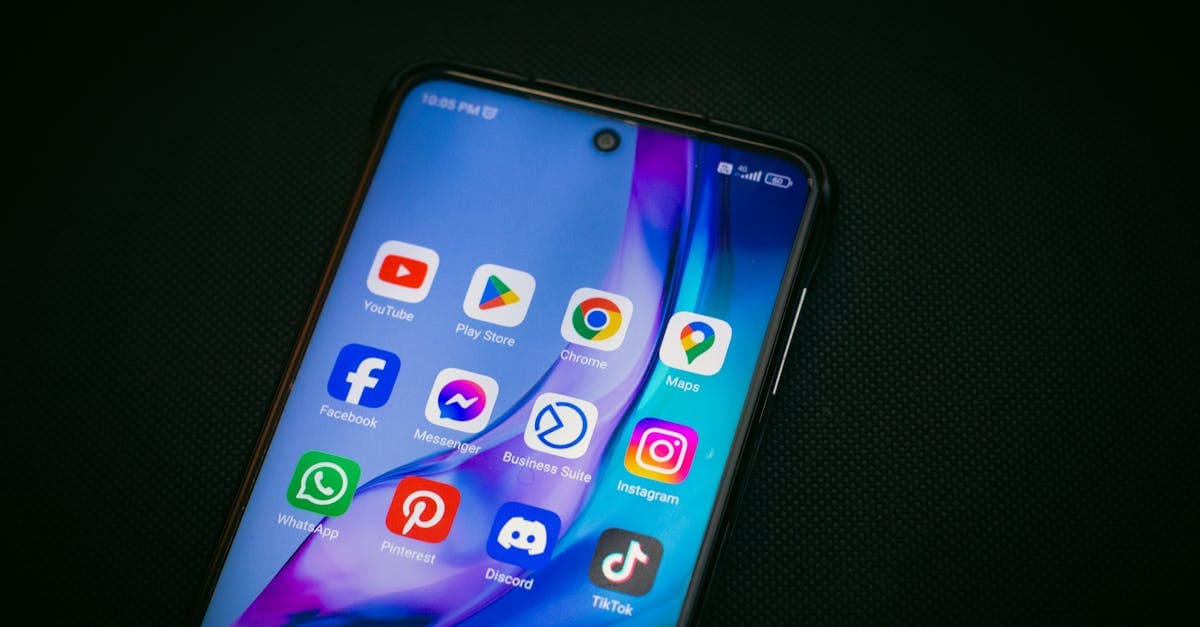
The best social media platforms for small business in 2026 are Instagram, TikTok, and Facebook for most local and consumer-facing businesses, with LinkedIn and YouTube Shorts as strong additions depending on your industry. The right mix depends on where your customers actually spend time and what kind of content you can realistically produce.
With over 5 billion people now using social media globally and average daily screen time hitting 143 minutes (Hootsuite, 2026), the opportunity is massive. But spreading yourself too thin across every platform is a recipe for burnout and mediocre results.
The smarter approach? Pick two or three platforms where your specific audience is already active, then show up consistently with content that actually connects. This guide breaks down each major platform with real performance data so you can make an informed decision, not just follow whatever advice is trending this week.
Key takeaway
Instagram is the strongest all-around platform for most small businesses in 2026, with TikTok offering the best organic reach and Facebook still dominating for local community building. Rather than trying to be everywhere, focus on two or three platforms that match your audience demographics, your content strengths, and your available time. Consistency on fewer platforms beats sporadic posting across many.
Instagram: The Best All-Around Platform for Small Business
Instagram remains the top recommendation for small businesses in 2026, and the numbers explain why. The platform has grown to over 3 billion monthly active users (Hootsuite, 2026), and business accounts now exceed 350 million. Small businesses make up nearly 65% of that figure (SocialPilot, 2026). It's the one platform where you can realistically reach customers through short-form video, static posts, Stories, and direct messaging, all in one place.
Reels continue to be the growth engine. Instagram's algorithm heavily favors video content, and Reels consistently outperform static images in reach and discovery. That said, Carousels have quietly become the highest-engagement format at 0.55% average engagement, edging out Reels at 0.50% (Social Insider, 2025). The smart play? Use both. Reels for reaching new people, Carousels for educating and converting the ones who already follow you.
Instagram Shopping features have also come a long way. Product tagging, in-app checkout, and shoppable Stories make it a genuine sales channel, not just a branding tool. U.S. social commerce sales are projected to hit $100.99 billion in 2026, up from $71.62 billion in 2024 (Hootsuite, 2026). And Instagram is one of the primary drivers of that growth.
For local businesses, Instagram works especially well because of its location tagging and local hashtag scene. Tagging your neighborhood, using local hashtags, and showing up in the Explore page for local searches all contribute to steady discovery. The platform rewards consistency over perfection. A small business posting four to five times per week with a mix of Reels, Carousels, and Stories will build a reliable audience over time.
TikTok: The Best Platform for Organic Reach
If you want the most eyeballs on your content without spending a dollar on ads, TikTok is where you should be. The platform has 1.99 billion monthly active users (Hootsuite, 2026), and its algorithm still offers something no other platform can match: genuine discovery for accounts with zero followers. Over 70% of brand video traffic on TikTok comes from the For You feed, meaning non-followers are driving the majority of your views (ALM Corp, 2025).
The engagement numbers are hard to argue with. TikTok leads all platforms with a 3.70% engagement rate in 2026, up 49% year over year (Metricool, 2026). Compare that to Instagram's 0.50% and Facebook's 0.15%, and the gap becomes obvious. Each piece of content you post on TikTok simply works harder than the same effort on other platforms.
For local businesses, TikTok launched its opt-in Local Feed in the United States in February 2026. This creates a dedicated space for location-based content discovery. For restaurants, retail shops, salons, and service businesses that depend on local foot traffic, this is the biggest platform shift in years. The algorithm already used location as a ranking signal, but a dedicated local feed takes that to another level.
TikTok is also becoming a legitimate search engine. Nearly half of consumers now use it to search for businesses and recommendations, and TikTok content is increasingly showing up in Google search results as well (EmbedSocial, 2026). People are searching "best brunch Ottawa" or "hair salon near me" directly on the app. If you're not posting, you're invisible in those results.
And here's the best part: the production bar remains low. A 15 to 30-second clip shot on your phone with decent lighting is all you need. TikTok rewards authenticity over polish, which works in favor of small businesses with limited production resources.
Facebook: Still Valuable for Community and Local Reach
Facebook gets written off constantly. Every year the predictions about its decline turn out to be premature. With 3.07 billion monthly active users and 2.11 billion daily active users (Sprout Social, 2026), it's still the largest social platform in the world. And for small businesses, it's far from dead. Over 200 million small businesses globally use Facebook to market their products and services (Hootsuite, 2025).
Where Facebook stands out in 2026 is community building and local engagement. Over 1.8 billion people use Facebook Groups monthly (Sprout Social, 2026). For local businesses, Groups are one of the most effective organic tools available. Think about it: a landscaping company that's active in a neighbourhood group, answering questions and sharing seasonal tips, builds trust in a way that paid ads simply can't replicate. More than 70% of Facebook users check business pages at least once a week (Charle Agency, 2026).
Facebook's demographics have shifted older, and that's actually an advantage for many businesses. If your customers are 35 and up, Facebook is likely where they spend the most social media time. The platform is especially strong for service businesses, home improvement, real estate, healthcare, and any industry where the buying decision involves research and trust.
Facebook Reels still deserve attention because Meta has pushed video deeper into the feed, and Sprout Social notes that 90 to 120 seconds is the engagement sweet spot for Facebook Reels (Sprout Social, 2026). If you're already creating short-form video for TikTok or Instagram, cross-posting to Facebook Reels takes minimal extra effort.
On the advertising side, 29% of global marketers say Facebook delivers the best ROI among social platforms (Sprout Social, 2026). For small businesses with even a modest ad budget, Facebook's targeting capabilities for local audiences remain among the most precise available.
LinkedIn: The Best Platform for B2B Small Businesses
If your business sells to other businesses, LinkedIn isn't optional. It's where your buyers are researching, evaluating, and making decisions. LinkedIn's global membership surpassed 1.2 billion in 2025 and is projected to exceed 1.3 billion in 2026 (Martal Group, 2026). And here's the key stat: 4 out of 5 LinkedIn members drive business decisions at their organizations (LinkedIn, 2025). It's the only major social platform where the majority of users have direct purchasing authority.
The lead generation data is hard to argue with. Between 75% and 85% of all B2B social media leads come from LinkedIn (Sopro, 2025). 40% of B2B marketers say it's the most effective channel for generating high-quality leads (Sopro, 2025). LinkedIn also drives 46% of social media traffic to B2B websites (Sopro, 2025). No other platform comes close for business-to-business marketing.
Content strategy on LinkedIn has evolved a lot. Carousel posts now achieve the highest engagement at 6.60% average rate, outperforming video by 278% and images by 303% (SocialPilot, 2026). Thought leadership content, industry insights, and genuine expertise perform far better than corporate announcements or self-promotional posts. The algorithm rewards content that generates comments and conversation.
For small B2B businesses, LinkedIn offers a unique advantage: you can target decision-makers by industry, company size, job title, and geography with a precision that no other platform offers. A consulting firm, IT service provider, or B2B SaaS company can build a pipeline of qualified leads through consistent LinkedIn content without spending anything on advertising.
LinkedIn's cost per lead is 28% lower than Google Ads while delivering 2x higher conversion rates (Sopro, 2025). For B2B businesses, this makes LinkedIn one of the most cost-effective marketing channels available.
YouTube Shorts: The Underrated Platform for Long-Term Growth
YouTube Shorts is the platform most small businesses are ignoring, and that's exactly why it represents such a strong opportunity. YouTube Shorts now has 2 billion monthly users, putting it ahead of both TikTok and Instagram Reels in total reach (DemandSage, 2026). Daily views have exploded to 200 billion as of mid-2025, nearly tripling from 70 billion just a year earlier (Loopex Digital, 2026).
What makes YouTube Shorts different is the search component. YouTube is the world's second-largest search engine, and Shorts content gets indexed alongside long-form videos. When someone searches "how to fix a leaky faucet" or "best restaurants in Ottawa," your Shorts can appear in those results and continue driving views for months or years. On TikTok, content has a lifespan of days. On YouTube, it can compound indefinitely.
The discovery potential is real. 74% of Shorts views come from non-subscribers, making it YouTube's primary discovery format (Sprout Social, 2025). Channels that publish both Shorts and long-form content grow 41% faster than those that only post one format (Sprout Social, 2025). For small businesses already creating any kind of video content, adding Shorts accelerates growth across the entire channel.
Engagement rates on Shorts are strong at 5.91% (Social Insider, 2025), outperforming both Instagram Reels and TikTok by that measure. Despite this, only 9% of U.S. small businesses currently use YouTube (Loopex Digital, 2026). The competition is thin.
Here's the practical takeaway: if you're already creating short-form video for TikTok or Instagram, repurposing that content to YouTube Shorts takes almost no extra effort. It gives you access to a search-driven audience that other platforms can't provide. It's the closest thing to "free" long-term marketing infrastructure that exists right now.
How to Choose the Right Platforms for Your Business
The biggest mistake small businesses make with social media is trying to be active on every platform at once. You end up posting inconsistently everywhere instead of building real momentum somewhere. Here's a simple framework for choosing the right platforms.
Start with your audience. If your customers are consumers aged 18 to 34, prioritize Instagram and TikTok. If they're 35 and up, Facebook and Instagram are your best bet. If you sell to other businesses, LinkedIn is non-negotiable. These aren't hard rules, but they give you a starting point based on where attention actually lives.
Next, consider your content strengths. If you're comfortable on camera or your business is visually interesting (food, fitness, retail, beauty), lean into short-form video on TikTok and Instagram Reels. If your strength is written expertise and industry knowledge, LinkedIn is your platform. And if you're already creating video content of any kind, add YouTube Shorts for long-term search visibility.
Then be realistic about your time. Social media marketing delivers an average ROI of $5.28 for every $1 spent when managed correctly (Hootsuite, 2026), but that return requires consistency. Posting three to four times per week on two platforms will always outperform posting once a week on five platforms. Pick two, commit to a 90-day cadence, and evaluate results before expanding.
Here's a quick decision guide. Local B2C businesses (restaurants, salons, retail): start with Instagram and TikTok. Service businesses targeting homeowners: start with Facebook and Instagram. B2B companies: start with LinkedIn and add YouTube Shorts. If you have the bandwidth for a third platform, add YouTube Shorts for every category since the long-term search value is too good to ignore.
The platforms that work best are the ones you actually show up on. Pick the ones that match your audience, your content style, and your schedule, then execute consistently.
There's no single "best" social media platform for every small business. The right answer depends on your audience, your industry, and what kind of content you can produce consistently.
What we can say with confidence is this: Instagram is the strongest all-around option for most small businesses. TikTok offers unmatched organic reach. Facebook remains essential for community and local marketing. LinkedIn dominates B2B lead generation. And YouTube Shorts is the most underused growth channel available right now.
Pick two or three platforms, commit to a consistent posting schedule, and give it 90 days before you judge results. If you want help figuring out which platforms make sense for your specific business, our team at QUE Media offers free consultations. We'll review your current presence, identify the biggest opportunities, and map out a plan that fits your goals and your schedule.
Frequently Asked Questions
What is the best social media platform for small business?
Instagram is the best all-around platform for most small businesses in 2026. It offers the widest mix of content formats (Reels, Carousels, Stories, DMs), strong local discovery features, and built-in shopping tools. With over 350 million business accounts and 3 billion monthly users, it balances reach, engagement, and conversion better than any single alternative.
Is TikTok good for small business marketing?
Yes. TikTok delivers the highest organic reach and engagement of any platform, with a 3.70% engagement rate compared to 0.50% on Instagram. Its algorithm surfaces content to nearby users regardless of follower count, making it especially powerful for local businesses. The new Local Feed feature in 2026 further strengthens its value for location-based discovery.
Is Facebook still worth it for small businesses?
Facebook is still very much worth it, especially for businesses targeting customers aged 35 and up. With 3.07 billion monthly users and 1.8 billion people active in Groups, it remains the strongest platform for community building and local engagement. Facebook ads also continue to deliver strong ROI for local targeting with even modest budgets.
How many social media platforms should a small business be on?
Two to three platforms is the sweet spot for most small businesses. Posting consistently on two platforms will always outperform sporadic activity across five. Start with the platforms that best match your audience demographics and content strengths, commit to 90 days of consistent posting, and only expand once you have a reliable workflow in place.
What is the fastest growing social media platform in 2026?
TikTok remains the fastest growing major platform by engagement, with its engagement rate climbing 49% year over year in 2026. YouTube Shorts is the fastest growing by daily views, nearly tripling from 70 billion to 200 billion daily views between mid-2024 and mid-2025. Both platforms represent major growth opportunities for small businesses.
Should a B2B small business be on TikTok or LinkedIn?
LinkedIn should be the priority for B2B businesses. Between 75% and 85% of all B2B social media leads come from LinkedIn, and 4 out of 5 members drive business decisions. TikTok can work as a secondary channel for brand awareness, but LinkedIn is where B2B purchase decisions actually happen and where your content reaches qualified decision-makers.
Sources
- Social Insider, 2025
- ALM Corp, 2025
- Sprout Social, 2026
- DemandSage, 2026
- Sprout Social TikTok, 2025
- HubSpot, 2026
- Hootsuite, 2026
- SocialPilot, 2026
- Metricool, 2026
- EmbedSocial, 2026
- Charle Agency, 2026
- Sprout Social Facebook Stats, 2026
- Martal Group, 2026
- LinkedIn, 2025
- Sopro, 2025
- DemandSage, 2026
- Loopex Digital, 2026
- Sprout Social, 2025