
Both platforms deliver results, but for different reasons. Instagram Reels converts better for e-commerce and established brands, while TikTok offers unmatched organic reach for new accounts and viral discovery. The right choice depends on your business goals, audience, and content capacity.
If you're running a business in 2026 and trying to figure out where to invest your short-form video energy, this is the comparison that actually matters. Instagram Reels and TikTok are the two dominant platforms, but they play very different roles in a marketing strategy.
TikTok's For You feed drove over 70% of brand video traffic in 2025, up from the mid-50s in early 2024 (ALM Corp, 2025). Meanwhile, Instagram Reels accounts for 41% of all time spent on the Instagram app (Phantom Digital, 2025). Both platforms are growing, but they reward different behaviors, serve different audiences, and produce different business outcomes.
Here's what the data actually says. No hype, no oversimplification.
Key takeaway
TikTok delivers higher engagement rates (7.4% vs 4.3%) and stronger organic reach for new accounts, while Instagram Reels drives 1.3x higher conversion rates and performs better for brands with established audiences. Most businesses benefit from using both, with TikTok for discovery and Reels for conversion.
Instagram Reels vs TikTok: Engagement Rate Comparison
The numbers tell a clear story, and TikTok leads on raw engagement. TikTok's average video engagement rate sits at 7.4%, compared to Instagram Reels at 4.3% (Phantom Digital, 2026). For accounts with 100,000 to 500,000 followers, the gap widens even further: TikTok averages 9.74% engagement while Instagram Reels comes in at 6.59% (The Influencer Marketing Factory, 2026).
TikTok's median brand engagement rate peaked at 35.9% in Q3 2025. And even after settling to 27.6% in Q4 2025, it remained the highest across all major platforms (ALM Corp, 2025).
But Instagram tells a different story on the conversion side. Reels deliver 1.3x higher e-commerce conversion rates than TikTok ads (Enhencer, 2025). For businesses where the goal is driving purchases, not just views, that gap matters. Instagram's shopping features, product tagging, and mature ad environment give it a clear edge when the objective is revenue.
Smaller creators feel the difference most on TikTok. Accounts with modest followings can achieve engagement rates of up to 7.5%, compared to around 3.65% on Instagram (Socialinsider, 2025). TikTok's content-first distribution model means a great video from a 200-follower account gets treated similarly to one from a 200,000-follower account. Instagram still tends to reward existing audience size more heavily, which makes it harder for new accounts to break through organically.
The bottom line: if engagement and visibility are your primary metrics, TikTok wins. If you're optimizing for conversions and sales, Reels has the edge.
How the Instagram Reels Algorithm Works vs TikTok
The algorithms on these two platforms have diverged quite a bit by 2026. Understanding the differences changes how you should approach content on each one.
TikTok's algorithm is retention-driven and satisfaction-focused. It evaluates watch time, replays, shares, and completion rate to decide whether a video gets pushed to a wider audience. The key shift in 2026 is that TikTok now uses stronger quality gates and prioritizes "watch behavior" over vanity metrics like likes (Reels Builder, 2026). A video that people watch all the way through twice will outperform one that gets a lot of likes but low watch time.
Instagram Reels has moved in a slightly different direction. The 2026 Reels algorithm is entertainment-first, with two new ranking signals that matter: retention curve (how long people watch before swiping away) and skip rate (Sync Studio, 2026). If viewers scroll past your Reel within the first second, it gets downranked quickly. Instagram also penalizes reposted content and uses visual fingerprinting to detect videos that retain 70% or more of another creator's original visual or audio elements (Inro, 2026).
Here's the biggest structural difference. Instagram now tests Reels with non-followers first through Explore and the Reels feed, making it more discovery-led. TikTok, interestingly, has shifted toward testing content with followers first before pushing it to the broader For You page (Socialinsider, 2026). This is a meaningful reversal from a few years ago.
What does that mean in practice? TikTok now rewards accounts that have built engaged followings, while Instagram is giving newer accounts more discovery opportunities through Reels than it used to. Optimal video length also differs. Instagram Reels between 60 and 90 seconds receive the highest engagement, while TikTok's sweet spot remains shorter at 20 to 40 seconds (Socialinsider, 2026).
Which Platform Has Better Organic Reach for Businesses?
Organic reach is declining across social media. But the rate of decline varies sharply between platforms.
Instagram organic reach fell between 30% and 40% across every post format, including Reels, during 2025 (ALM Corp, 2025). Instagram's median engagement rate dropped from 16.9% in Q1 2024 to 9.7% in Q4 2025 (ALM Corp, 2025). That's a steep decline in just two years, driven by platform saturation and increased competition for feed placement.
TikTok is heading in the opposite direction. Brand follower counts on TikTok grew by a median of 200% year-over-year in 2025, the highest growth rate of any platform tracked (ALM Corp, 2025). Over 70% of brand video traffic on TikTok originated from the For You feed (ALM Corp, 2025). That means the majority of views come from people who don't already follow the account. For businesses trying to reach new audiences without paid promotion, this is a critical advantage.
TikTok also generates far more impressions per post. The platform averages 6,268 impressions per post compared to Instagram's 2,635 (Napolify, 2025). Each piece of content on TikTok works more than twice as hard in terms of raw visibility.
That said, Instagram's reach decline comes with context. Instagram has a more established ad environment, and the platform's users tend to be further along in the buying journey. A Reel that reaches 1,000 people on Instagram may generate more direct business outcomes than a TikTok that reaches 3,000, because Instagram users are accustomed to shopping and inquiring through the app. For Ottawa businesses specifically, the question isn't just how many people see your content. It's whether those people are ready to take action.
Instagram Reels vs TikTok: Which Demographics Use Each?
Both platforms skew young, but their audience compositions have meaningful differences that matter for business targeting.
TikTok's largest user segment is 25 to 34 year olds at 35.3% of users, followed by 18 to 24 year olds at 30.7%. Teens aged 13 to 17 account for roughly 14% of the user base (Statista, 2025). TikTok has reached nearly 1.9 billion monthly active users globally as of 2026 (Business of Apps, 2026), with a gender split of 55.7% male and 44.3% female (Statista, 2026).
Instagram's demographics tell a similar but slightly older story. About 33.3% of global Instagram users are 25 to 34, and 29.7% are 18 to 24 (Statista, 2025). The key difference is in the 35-plus audience: 17.4% of Instagram users are 35 to 44, and the platform has a stronger presence among users over 45 compared to TikTok. In the U.S., the breakdown is 26.5% ages 18 to 24, 28.3% ages 25 to 34, 19.4% ages 35 to 44, and 12.2% ages 45 to 54 (Statista, 2025). Instagram reaches over 2 billion monthly active users globally.
For Ottawa businesses, this translates to practical targeting decisions. If your primary customers are under 30, TikTok likely gives you more reach per dollar of effort. If you're targeting homeowners, parents, or professionals aged 30 to 50, Instagram's slightly older user base may be more aligned. In Canada specifically, TikTok reaches 12.9 million adult users (DataReportal, 2025), while Instagram's Canadian user base is larger at roughly 18 to 19 million.
One trend worth watching: TikTok's fastest-growing demographic is the 35 to 44 age group, which grew from 12.6% to 13.5% of the platform in 2025 alone (Statista, 2025). The age gap between the two platforms is closing.
Content Strategy Differences Between Reels and TikTok
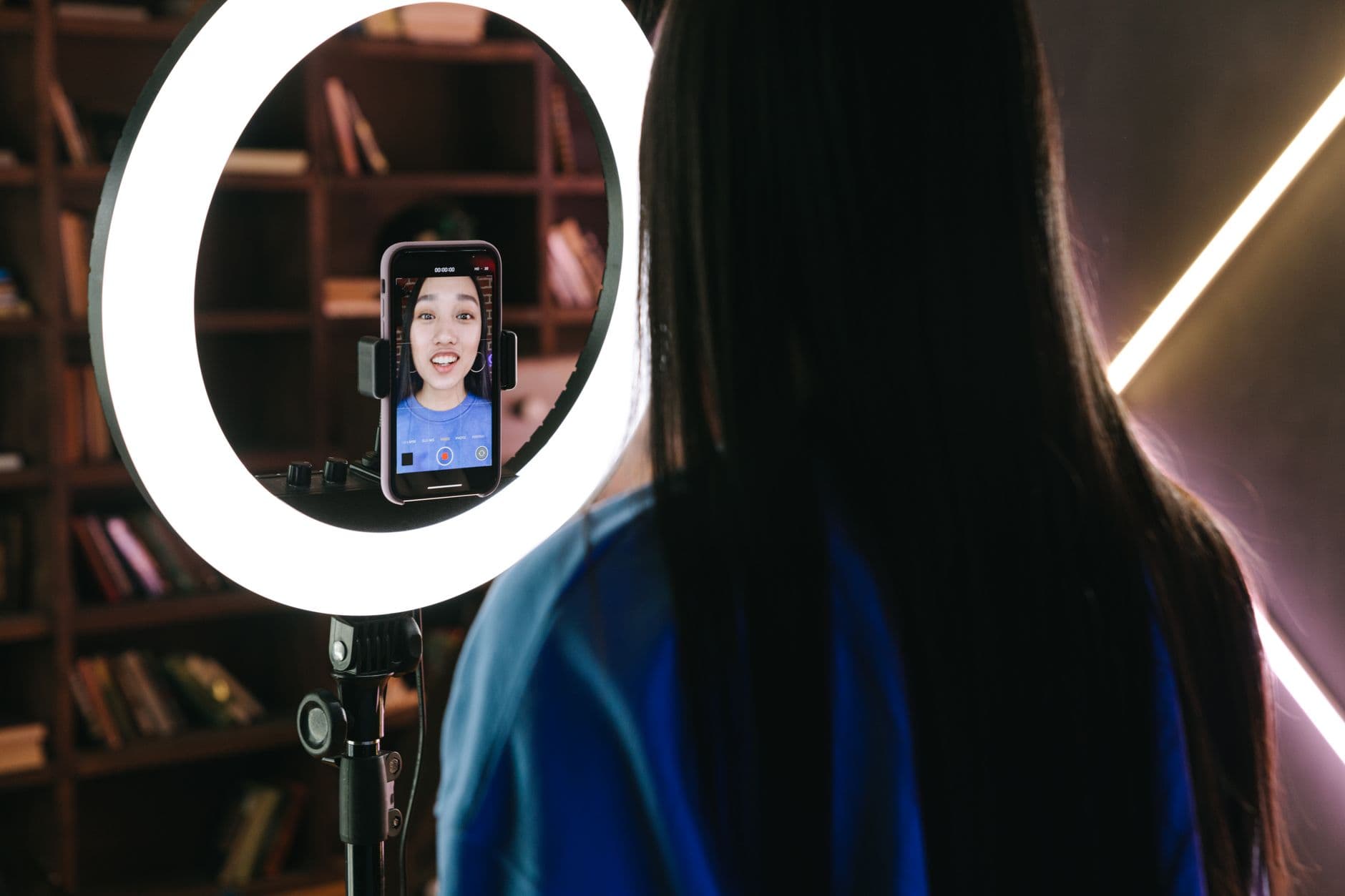
What performs well on TikTok and what performs well on Reels are converging. But there are still important differences in how you should approach each platform.
On TikTok, the content that works best is fast-paced, personality-driven, and hooks the viewer in the first one to two seconds. The platform rewards raw authenticity over production value. Quick cuts, direct-to-camera talking, text overlays, and trend participation are the building blocks. The optimal video length on TikTok is 20 to 40 seconds (Socialinsider, 2026), and the algorithm favors content that gets replayed or shared.
Instagram Reels rewards a slightly more polished approach. While overly corporate content still falls flat, Reels tends to favor content with cleaner visuals, smoother transitions, and a more curated aesthetic. The optimal length is longer at 60 to 90 seconds (Socialinsider, 2026), which gives you more room for storytelling, tutorials, and detailed demonstrations. And Instagram penalizes recycled TikTok content that still carries the TikTok watermark, so simply cross-posting without adjustments will hurt your reach.
For Ottawa businesses specifically, here's how to think about it. Use TikTok for content that feels spontaneous: a quick behind-the-scenes look at your shop, a 20-second tip related to your industry, a reaction to a local event, or a trend adaptation that fits your brand. Use Reels for content that's slightly more considered: a before-and-after transformation, a short tutorial, a product showcase with clean lighting, or a customer testimonial.
The most efficient approach is to create content with both platforms in mind. Film your core content once, then edit two versions. The TikTok version should be shorter, faster, and more casual. The Reels version can be slightly longer and more polished. This keeps your workload manageable while respecting each platform's preferences.
Should Your Business Be on Both Platforms?
For most businesses, the honest answer is yes, but with a clear priority. Running both platforms doesn't mean doubling your content workload. It means creating short-form video once and adapting it for two distribution channels.
The brands seeing the strongest results in 2026 are running a hybrid approach: testing trends and building awareness on TikTok, then driving conversions and deepening relationships on Instagram Reels.
That said, if you can only commit to one platform right now, here's how to decide. Choose TikTok if you're a newer business looking to build awareness, if your target audience skews under 35, or if your primary goal is reaching people who've never heard of you. TikTok's organic reach advantage (6,268 impressions per post vs Instagram's 2,635) makes it the better discovery engine. Choose Instagram Reels if you already have an established Instagram following, if your audience is 30-plus, or if your goal is driving direct sales and inquiries. Instagram's 1.3x higher conversion rate and integrated shopping tools make it the stronger closing platform.
For Ottawa businesses specifically, consider your local market. Ottawa's population skews slightly older and more professional than cities like Toronto or Montreal. Instagram's stronger 35-plus demographic may align better with certain local audiences, particularly in professional services, real estate, and B2B. But for restaurants, retail, fitness studios, and lifestyle brands targeting younger Ottawa residents, TikTok's engagement advantage is hard to ignore.
Here's the practical recommendation: start with the platform that best matches your audience and goals, get consistent there, and then expand to the second platform by repurposing your best-performing content. If you need help building a strategy that works across both platforms, reach out to our team at QUE Media for a free consultation. We help Ottawa businesses figure out exactly where their content will have the most impact.
Instagram Reels and TikTok are both essential platforms for business marketing in 2026, but they serve different purposes. TikTok wins on engagement (7.4% vs 4.3%), organic reach (6,268 vs 2,635 impressions per post), and new audience discovery. Instagram Reels wins on conversions (1.3x higher), audience maturity, and integrated shopping features.
The smartest approach isn't choosing one over the other. It's using both strategically, with TikTok as your top-of-funnel discovery engine and Reels as your conversion and relationship-building tool.
Start with the platform that matches your audience, get consistent, and expand from there. If you want help building a short-form video strategy that drives real results across both platforms, reach out to our team at QUE Media for a free consultation. We work with Ottawa businesses every day to turn short-form video into measurable growth, and we'll map out a plan that fits your goals and your schedule.
Frequently Asked Questions
Is Instagram Reels or TikTok better for small business?
It depends on your goals. TikTok is better for reaching new audiences organically, with 6,268 average impressions per post compared to Instagram's 2,635. Instagram Reels is better for converting existing followers into customers, with 1.3x higher conversion rates. For small businesses with limited time, start with the platform where your target audience is most active.
Do Instagram Reels and TikTok use the same algorithm?
No. TikTok's algorithm is retention-focused and distributes content based on watch time, shares, and replays. Instagram's Reels algorithm prioritizes retention curve and skip rate, and actively penalizes reposted content. In 2026, TikTok tests content with followers first, while Instagram tests Reels with non-followers through Explore. They reward different behaviors.
Can I post the same video on Reels and TikTok?
You can repurpose the same core content, but you should make adjustments for each platform. Instagram penalizes videos with the TikTok watermark and favors slightly longer content (60 to 90 seconds vs TikTok's 20 to 40 seconds). Film once, then edit two versions: a shorter, faster cut for TikTok and a slightly more polished version for Reels.
Which platform has higher engagement rates for business accounts?
TikTok leads on engagement across the board. The average video engagement rate on TikTok is 7.4% compared to 4.3% on Instagram Reels (<a href="https://phantomdigital.co/blog/" target="_blank" rel="noopener">Phantom Digital, 2026</a>). For smaller creators, the gap is even wider, with TikTok delivering up to 7.5% engagement versus 3.65% on Instagram. However, Instagram's engagement translates more directly to purchases.
Is TikTok better than Instagram for local businesses?
TikTok has a strong advantage for local discovery. Its algorithm uses location data to push content to nearby users, and over 70% of brand video traffic comes from non-followers via the For You feed. Instagram offers more shopping features and a slightly older audience. For Ottawa businesses, TikTok excels at building local awareness, while Instagram is stronger for closing sales.