

A salon owner in Ottawa usually knows when the booking calendar feels healthy. The chairs are full on Thursday, color appointments are stacking into the weekend, and the front desk is not scrambling to fill last-minute gaps. You can usually see the opposite online before you feel it in the schedule. The Instagram grid goes quiet. Stories turn into occasional promo slides. Google reviews sit unanswered.
That is the hard part about salon marketing. People rarely book based on one polished post. They book after a pattern. They see strong transformations, get a feel for the space, notice that the team seems active, and feel reassured that real clients are still walking through the door.
This guide breaks down how social media marketing for salons actually works in Ottawa right now, what kind of content turns views into booked appointments, and how to build a system that does not eat your evenings alive.
Key takeaway
For Ottawa salons, the fastest way to make social media useful again is to treat it like a booking system, not a poster board. Show real transformations, film short videos consistently, keep your Google profile active, and make every piece of content answer the same question a new client is asking: can I trust this salon with my hair, skin, or nails?
Why Ottawa salon clients check Instagram and Google before they book
Salon buyers do a lot of quiet research before they ever send a DM. They want to see your work, your vibe, your pricing signals, and whether the business feels current. Canada had 79.4% social media user identities in January 2025, while Instagram alone had 19.8 million users in Canada and TikTok had 12.9 million adult users, according to DataReportal's Digital 2025: Canada. For a salon, that means the platforms your clients already use every day are also where first impressions happen.
Instagram usually handles the emotional side of the decision. A potential client sees whether your cuts look modern, whether your color work photographs well, and whether your team feels friendly instead of intimidating. Google handles the risk check. They look at reviews, hours, location, and how recently the business seems updated.
That second part matters more than a lot of salon owners realize. BrightLocal's Local Consumer Review Survey found that 89% of consumers expect business owners to respond to reviews, 81% expect a response within a week, and 50% are less likely to choose a business if the replies feel generic. In other words, a quiet or neglected profile does not read as neutral. It reads as risky.
Google says that businesses can add photos and videos of their storefront, products, and services, and that exterior photos help customers recognize the business when they visit, according to Google Business Profile Help. For salons, that is not a small detail. Your entrance, stations, treatment rooms, and finished client results help close the gap between online interest and an actual appointment.
What salon content actually gets appointments, not just likes
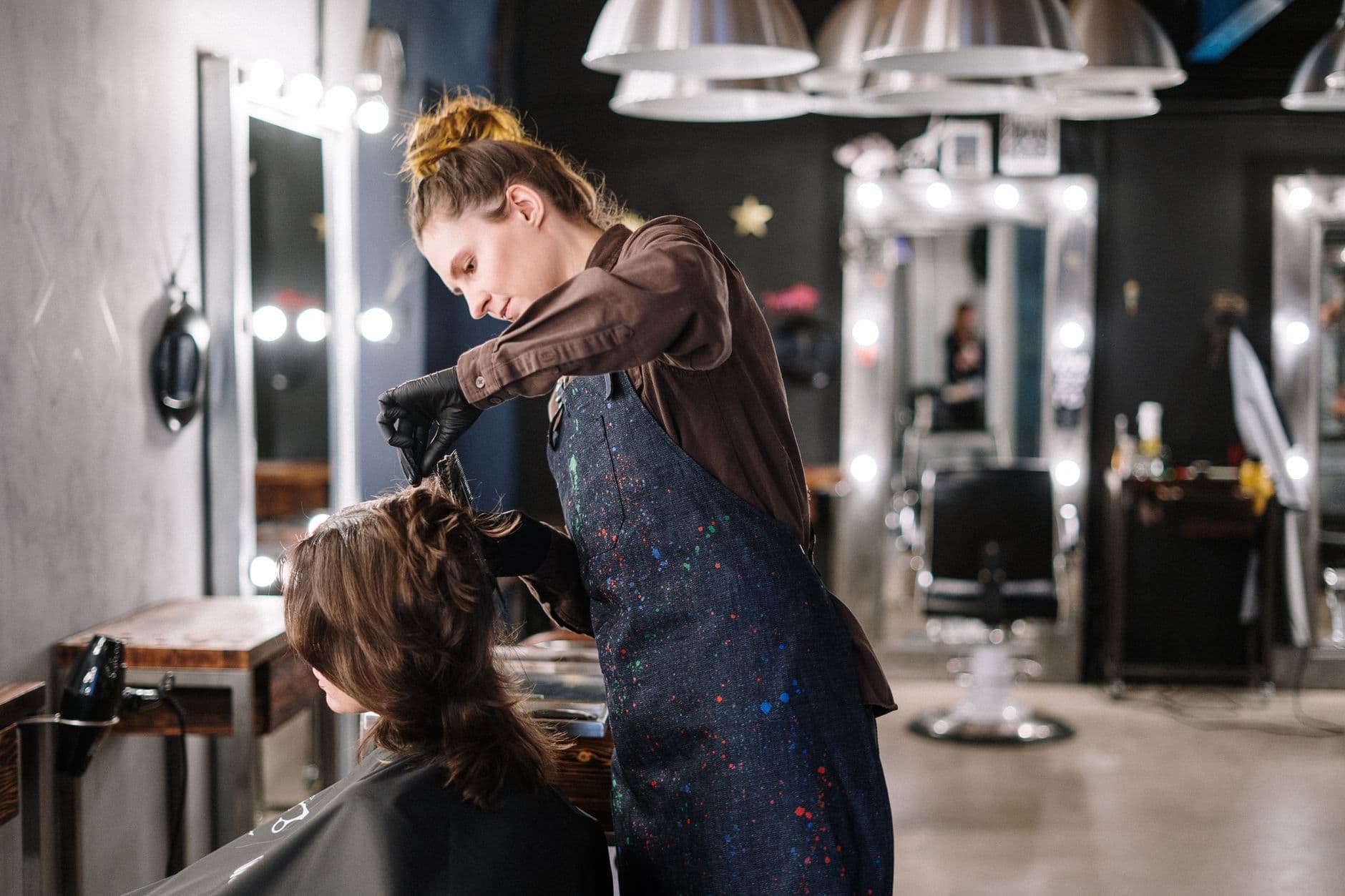
The best salon content does not try to look like a generic ad. It reduces uncertainty. A before-and-after reel shows skill. A stylist talking through who a service is right for shows expertise. A quick clip of a blowout, balayage process, facial setup, or nail finish shows what the client can expect when they walk in.
Video matters here because beauty is a visual trust business. Wyzowl's Video Marketing Statistics report says 89% of consumers say video quality affects their trust in a brand, and 63% say they would most like to learn about a product or service through a short video. A salon does not need studio-level production to benefit from that. It needs steady, clear, well-lit proof that the work is good.
The easiest content pillars for salons are usually transformations, education, personality, and proof. Transformations include color corrections, cut refreshes, lash fills, skin results, or bridal prep. Education covers topics like how often to tone blonde hair, what to expect after a facial, or how to prepare for extensions. Personality is your team on camera, your front desk energy, your music, your culture, your sense of taste. Proof is reviews, client reactions, and repeat customers.
If your salon has been posting mostly static flyers, price graphics, or holiday promos, that is usually why the account feels flat. Those posts ask people to care before they have a reason to. A stronger approach is to pair social proof with useful context. That is the same logic behind our short-form video marketing for local business playbook and why salons often get the most lift from repeatable filming days rather than one-off content sprints.
This is also where a service like video and motion content production becomes practical instead of flashy. The goal is not to make every reel cinematic. The goal is to make sure your best work is consistently visible before a competitor with weaker work but better consistency wins the booking.
A salon content plan you can actually keep up with each week
Most salon owners do not fail because they lack ideas. They fail because the plan only works on a perfect week. If the strategy depends on filming every day between clients, it dies as soon as someone calls in sick or the Saturday rush hits.
A better system is to batch one hour of footage each week and repurpose it. Film three service moments, one staff tip, one client reaction if available, and a few short clips of the salon itself. That single batch can turn into three reels, several stories, one review graphic, and one Google Business Profile photo update.
A simple weekly rhythm looks like this: Monday, post a transformation or result. Wednesday, post a stylist tip or service explainer. Friday, post a personality or behind-the-scenes reel. Stories run in between with appointment openings, product recommendations, team moments, or quick reposts of client tags.
This kind of consistency matters because it keeps you present without forcing you into constant creation mode. It also gives clients multiple entry points. One person books after seeing a dramatic before and after. Another books because the salon finally looks approachable on camera.
At QUE Media, this is usually the turning point for salons. Once content stops being improvised and starts running on a repeatable calendar, performance gets easier to read. You can tell what services attract attention, which stylists should be featured more often, and which content themes lead to actual DMs or website clicks. If you need help building that kind of repeatable system, our social strategy and content service is built around exactly that problem.
Should salons focus on Instagram, TikTok, or both?
For most Ottawa salons, Instagram is still the main platform. It is where portfolios, stories, location tags, and direct messages all work together. If a new client wants to browse your work quickly and then ask a question, Instagram makes that easy.
TikTok is still worth paying attention to, especially if you serve a younger audience or your team is comfortable filming more casually. DataReportal's 2025 Canada report shows TikTok's adult audience in Canada at 12.9 million users, which is too large to dismiss. TikTok can be the faster discovery engine. Instagram is usually the stronger platform for converting that attention into appointment intent because the profile behaves more like a living portfolio.
The mistake is treating this like an either-or decision too early. Most salons should start by getting consistent on Instagram, then reuse the same raw footage for TikTok once the production habit is there. Your TikTok version can be faster and looser. Your Instagram version can be slightly cleaner and more service-focused.
If you want the platform breakdown in more detail, our Instagram Reels vs TikTok for business guide goes deeper on how the two channels behave. For salons specifically, the practical answer is simple: pick one primary platform you can sustain, then expand only after the first one is healthy.
Why salon social media and Google Business Profile need to work together
A lot of salon marketing gets split into separate buckets. Instagram is for content. Google is for search. Reviews are for the front desk. In practice, clients do not experience them separately. They move across all of them inside the same decision process.
Someone might discover your reel first, search your business name next, scan your Google reviews, check your hours, and then click back to Instagram to look at more work. If any one of those touchpoints feels stale, the whole brand takes the hit.
That is why your Google Business Profile should be treated like an extension of your content strategy. Use it to keep service photos fresh, answer reviews promptly, confirm accurate hours, and reinforce the same positioning your social content is already building. Google explicitly recommends adding photos and videos that help customers recognize the business and its services, which fits salons perfectly because visual proof reduces hesitation before a visit.
BrightLocal's data makes the review piece even harder to ignore. If 89% of consumers expect responses and 81% expect them within a week, then unanswered reviews are not just a reputation issue. They are a conversion issue. This is where local SEO and visibility work supports salon social media instead of competing with it. The same client trust you are building on Instagram should show up in Google, Apple Maps, directories, and review platforms too.
How Ottawa salons can turn attention into booked appointments
Getting views is not the finish line. The content has to lead somewhere. For salons, that usually means a DM, a booking page click, a phone call, or a Google Maps action. If your account is getting decent reach but appointments are still inconsistent, the issue is often not awareness. It is friction.
Common friction points are easy to miss: no clear booking link, no service explainer for high-ticket appointments, no recent client results, no story highlights for pricing expectations, no visible stylist specialties, and no clear reason to choose this salon over the other ten options someone can find in Ottawa.
The fix is usually less glamorous than people expect. Add a visible booking path. Create highlights for services, FAQs, and transformations. Make sure your profile bio says what you do, where you are, and who you are for. Show enough of the salon that a first-time client can picture themselves there.
This is also the point where paid retargeting can start making sense. Once the organic content is doing its job, you can use ads to stay in front of people who visited your site or engaged with your profile.
If your salon is tired of guessing, the best next move is not more random posting. It is a tighter system. One that connects content, reviews, local visibility, and booking intent. If you want help building that system for your salon, talk to QUE Media. We can help you map out what to film, where to post it, and how to turn that attention into real appointment demand.
The salon owner with the quiet feed and the half-full Thursday schedule usually does not need a miracle. They need momentum they can sustain.
That starts with showing real work, on a regular cadence, in places where Ottawa clients already look before they book. Strong transformations. Helpful short videos. Prompt review replies. A profile that feels active, clear, and trustworthy.
Do that consistently and your marketing stops feeling like noise. It starts acting like a booking engine. And if you want a team to build that system with you, QUE Media is ready to help.
Frequently Asked Questions
What social media platform is best for salons in Ottawa?
For most Ottawa salons, Instagram is still the best place to start. It works as a portfolio, a messaging channel, and a discovery tool at the same time. TikTok can help with wider reach, especially for younger audiences, but Instagram is usually the stronger platform for turning interest into consultation requests and bookings.
How often should a salon post on social media?
A realistic starting point is three feed posts or reels per week, plus stories in between. That is enough to keep the account active without making the team feel buried. What matters most is consistency.
What kind of salon content gets the most bookings?
Transformations, service explainers, stylist tips, and client proof usually do the most work. People book when they can see the quality of the result and understand what the appointment is like. Before-and-after reels, color correction clips, facial walkthroughs, and quick answers to common client questions all help reduce hesitation.
Do Google reviews matter for salon marketing?
Yes. Reviews matter because they often confirm or undermine the trust your social content creates. A strong Instagram page can get someone interested, but recent reviews and thoughtful replies help them feel safe enough to book. If reviews are stale or unanswered, clients often assume the service experience may be inconsistent too.
Should salons run ads or focus on organic content first?
Most salons should fix the organic foundation first. If the profile is thin, the reviews are quiet, and there is not enough proof of the work, paid traffic just sends more people into a weak funnel. Once the booking path is clear, retargeting and local paid campaigns can work much better.